
Vegan herbed rice pilaf is one of the easiest ways to turn simple pantry staples into a flavorful, aromatic meal. Fresh or dried herbs blend with tender vegetables and perfectly steamed rice, creating a dish that feels both wholesome and vibrant. The rice cooker makes this recipe even more convenient by handling the heat, moisture, and timing while the ingredients infuse naturally into the grains. If you enjoy versatile rice cooker sides, you might also like the mellow spinach garlic rice, the fragrant coconut jasmine rice, or the rich vegan garlic butter rice in a rice cooker.
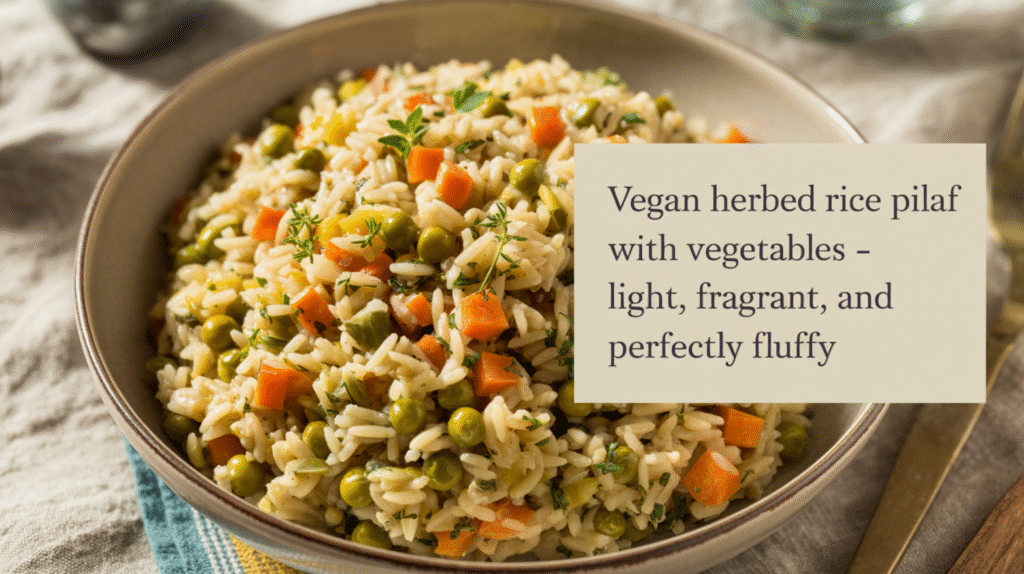
This guide explains how herbs transform the flavor profile, how vegetables contribute sweetness and texture, and the step-by-step method to help you achieve consistently fluffy pilaf every time.
Why Herbed Vegetable Pilaf Works Perfectly in a Rice Cooker
Pilaf relies on controlled moisture absorption, and rice cookers are designed for exactly that. The herbs release aroma as steam builds, while the vegetables soften at the same pace the rice cooks. This creates a unified, balanced dish without needing sautéing or constant stirring. The same steady, enclosed heat is what makes simple recipes like rice cooker veggie broth rice so reliable and hands-off.
How Herbs Develop Deeper Flavor During Cooking
When herbs meet gentle heat and moisture, their essential oils diffuse into the rice.
- They create a layered, aromatic base that elevates mild grains
- Their flavor intensifies without overpowering the vegetables
How Vegetables Enhance Texture and Nutrition
Vegetables release a small amount of natural moisture and sweetness as they cook.
- They brighten the pilaf with color and subtle sweetness
- They add a tender bite that contrasts the fluffy rice
Ingredients for Vegan Herbed Rice Pilaf with Vegetables
This recipe uses familiar ingredients, but the combination of herbs and vegetables makes it feel fresh and satisfying.
Base Rice Components
These ingredients create the structure of the pilaf.
- Long-grain white rice (basmati or jasmine)
- Vegetable broth or water
- Olive oil (optional, for richness)
Vegetable Add-Ins
Use a mix of vegetables for both color and flavor.
- Chopped carrots
- Peas, green beans, or corn
- Diced onion or shallot
Herb and Seasoning Essentials
Herbs are the heart of this pilaf’s flavor profile.
- Dried thyme, parsley, or oregano
- Fresh parsley or dill for garnish
- Salt and black pepper
How to Make Vegan Herbed Rice Pilaf with Vegetables
The rice cooker’s consistent heat ensures every component cooks at the same pace. A few simple steps bring the dish together effortlessly.
Step 1: Rinse the Rice
Rinsing removes excess starch and helps create fluffy grains.
- Use cold water and rinse until the water looks clearer
- Drain well to avoid adding extra liquid to the cooker
Step 2: Prepare the Vegetables
Evenly cut vegetables help everything cook uniformly.
- Dice carrots into small, thin pieces for faster softening
- Use fresh or frozen peas without thawing
Step 3: Add Everything to the Rice Cooker
Combine rice, vegetables, and seasonings directly in the cooker.
- Add the rinsed rice first
- Pour in vegetable broth at a 1:1.5 or 1:2 rice-to-liquid ratio
- Stir in vegetables, herbs, salt, and pepper
Step 4: Select the Ideal Cooking Setting
Use the “White Rice” or “Cook” function unless your cooker includes a “Pilaf” setting.
- Maintain a closed lid to trap steam
- Allow the rice cooker to complete its full cycle
Step 5: Rest and Fluff the Pilaf
Resting allows the herbs and vegetables to settle into the grains.
- Keep the lid closed for 5–10 minutes after cooking
- Fluff the rice gently to separate grains and mix the vegetables more evenly
Flavor Variations for Vegan Herbed Pilaf
Small tweaks can shift the dish into different flavor directions without changing the core method.
Mediterranean-Inspired Variations
Herbs and vegetables can lean into sunny, bright flavors.
- Use oregano, basil, a squeeze of lemon, or take inspiration from the flavors in vegan tomato basil rice
- Add roasted red peppers or olives after cooking
Fresh Garden Variations
These emphasize lighter, herb-forward combinations.
- Stir in fresh parsley or dill at the end
- Add fresh spinach just before serving and let it wilt naturally
Common Mistakes to Avoid
Pilaf is simple, but avoiding these pitfalls improves the result.
Using Too Many Vegetables
Too many vegetables can introduce excess moisture.
- Use moderate amounts to maintain fluffy grains
- Add extra vegetables at the end if desired
Skipping the Resting Step
Resting ensures optimal texture.
- Helps rice finish absorbing liquid
- Prevents clumping when fluffing
Health Benefits of Vegetable Herbed Pilaf
This dish offers balanced nutrition without heaviness.
Nutrient-Dense and Naturally Vegan
Vegetables and herbs add vitamins and antioxidants.
- Supports energy with complex carbohydrates
- Provides plant-based fiber and micronutrients
Light, Aromatic, and Easy to Digest
Herbs refresh the dish while vegetables add gentle sweetness.
- Makes a satisfying but mild main dish
- Suitable for meal prep or lighter dinners
Serving Suggestions
This pilaf pairs well with many vegan mains or can be served on its own as a complete meal.
As a Standalone Meal
Ideal for a quick, wholesome bowl.
- Top with toasted nuts for crunch
- Add a squeeze of lemon or lime
As a Side Dish
This pilaf complements a variety of plant-based dishes.
- Serve with roasted vegetables
- Pair with tofu, tempeh, or bean patties
- Serve alongside spiced mains such as vegan turmeric rice for a bolder plate
Cleaning and Rice Cooker Care
Broth and vegetables can leave mild residue, so proper care preserves your cooker.
Cleaning the Inner Pot
Gentle cleaning protects the non-stick surface.
- Let the pot cool slightly
- Wash with warm water and a soft sponge
Preventing Sticking in Future Batches
A few habits make cleanup easier.
- Lightly oil the pot before adding ingredients if sticking occurs
- Avoid metal utensils that can scratch the surface
FAQs
Here are some questions and answers about making vegan herbed rice pilaf with vegetables.
Can I use brown rice instead of white rice?
Yes, but brown rice requires more liquid and a longer cooking time. Follow your rice cooker’s brown rice settings for best results.
Can I use fresh herbs instead of dried herbs?
Absolutely. Add dried herbs before cooking and fresh herbs after cooking to preserve brightness and aroma.
Can I use frozen vegetables?
Yes. Add them directly from frozen without thawing. They soften perfectly as the rice cooks.
Can I make this pilaf oil-free?
Yes. Simply omit the oil and rely on vegetable broth for moisture and flavor.
How long does this pilaf store in the refrigerator?
It typically lasts three days when stored in an airtight container. Add a splash of broth when reheating to restore moisture.
To build out a full rice cooker pilaf collection, you can also try the savory mushroom rice pilaf in a rice cooker on another day.