When you’re short on time, recipes can feel like extra work. What you usually need is a fast path from “I have random ingredients” to “I’m eating something warm.” A rice cooker helps because it creates a steady, steamy environment where quick ingredients heat evenly and sauces spread through the pot without constant attention. That basic behavior is why time-saving meals sit naturally inside quick rice cooker meals under 30 minutes, where the real speed comes from smart assembly and fast-heating foods.
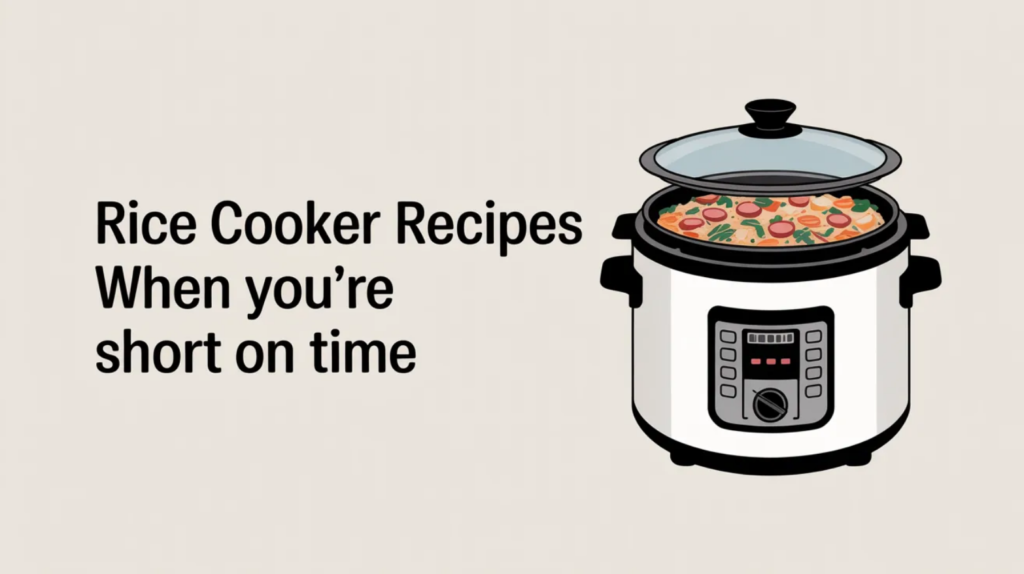
This article is intentionally not a list of “do these exact steps.” Instead, it gives you short, flexible recipe templates that work even when your brain is tired.
The 90-second decision method
If you can answer these three questions, you can build a meal quickly:
- Do I want dry-ish bowl or soupy bowl?
- Do I have protein ready (egg, beans, tuna, tofu)?
- What one strong flavor will carry the whole pot (salsa, curry paste, pesto, soy + butter)?
That’s it. Once those are chosen, the rice cooker does the rest of the warming and gentle steaming.
When time is tight because you’re trying to avoid any chopping at all, meals built from ready-to-use ingredients often become your easiest option. One of the quickest ways to reduce decisions is leaning into no prep meals, because the “open, add, warm” rhythm suits the rice cooker perfectly.
8 short-on-time rice cooker templates
1) The “Warm Bowl” Template (dry-ish, filling)
Use when: you want a proper meal that eats like a bowl, not soup.
Build it: warm base + protein + veg + bold sauce.
Why it works: steam softens and unifies the mix, so it tastes finished instead of assembled.
Good matches: cooked rice + beans + frozen veg + salsa, or couscous + chickpeas + pesto.
2) The “Steam-Top” Template (hands-off protein)
Use when: you want protein without extra dishes.
Build it: warm your base, then steam something on top (egg, tofu, thin fish, dumplings).
Why it works: steam sets or heats the topping gently while the base stays tender underneath.
Good matches: rice + egg + soy sauce, or rice + dumplings + spinach.
3) The “Thick Soup” Template (comfort fast)
Use when: you want something cozy and soothing.
Build it: broth + cooked rice or noodles + soft protein + quick veg.
Why it works: the cooker keeps steady heat, so the soup warms evenly without boiling hard.
Good matches: bouillon broth + rice + tofu + spinach.
4) The “Creamy Shortcut” Template (rich without cooking)
Use when: you want a rich texture but have no time.
Build it: warm base + fat + salty flavor + protein.
Why it works: heat loosens the fat and spreads it through the starch, creating creaminess.
Good matches: rice + butter + soy sauce + egg, or noodles + peanut sauce + frozen veg.
5) The “Two-Can” Template (panic-proof)
Use when: you have almost nothing fresh.
Build it: cooked rice + any two canned items + one sauce.
Why it works: canned foods are already cooked, and sauce spreads through steam.
Good matches: tuna + corn + rice + pepper, or chickpeas + tomato sauce + rice + spices.
6) The “Frozen-Only” Template (freezer dinner)
Use when: your fridge is empty.
Build it: base + frozen veg + frozen protein (or tofu) + seasoning.
Why it works: frozen ingredients release a little moisture as they heat, which keeps everything tender.
Good matches: rice + mixed veg + edamame + soy + sesame oil.
7) The “Acid + Heat” Template (when food feels bland)
Use when: you can’t afford a boring meal today.
Build it: any warm bowl, then finish with acid and spice.
Why it works: acid sharpens flavor and spice adds excitement, even if ingredients are plain.
Good matches: lemon + chili over tuna rice, or hot sauce over bean rice.
8) The “Breakfast-for-Dinner” Template (fast, steady energy)
Use when: you want something filling and simple.
Build it: quick oats or rice + egg + spinach + savory seasoning.
Why it works: oats hydrate fast and egg adds richness without needing a pan.
Good matches: savory oats with soy sauce and wilted greens.
Tiny shortcuts that make these faster
- Using hot water or hot broth helps the pot reach “steamy warmth” sooner.
- Adding the main sauce early helps it spread through the base while it heats.
- Adding the finishing touch late (sesame oil, lemon, chili) keeps the aroma lively.
Conclusion
Rice cooker recipes for short-on-time moments work because the rice cooker creates steady heat and gentle steam that helps quick ingredients heat evenly and blend into one dish. When you choose a simple template instead of a strict recipe, you reduce decisions, reduce prep, and still end up with a warm meal that feels complete. That calm reliability is exactly what makes the rice cooker valuable when the day is already moving too fast.