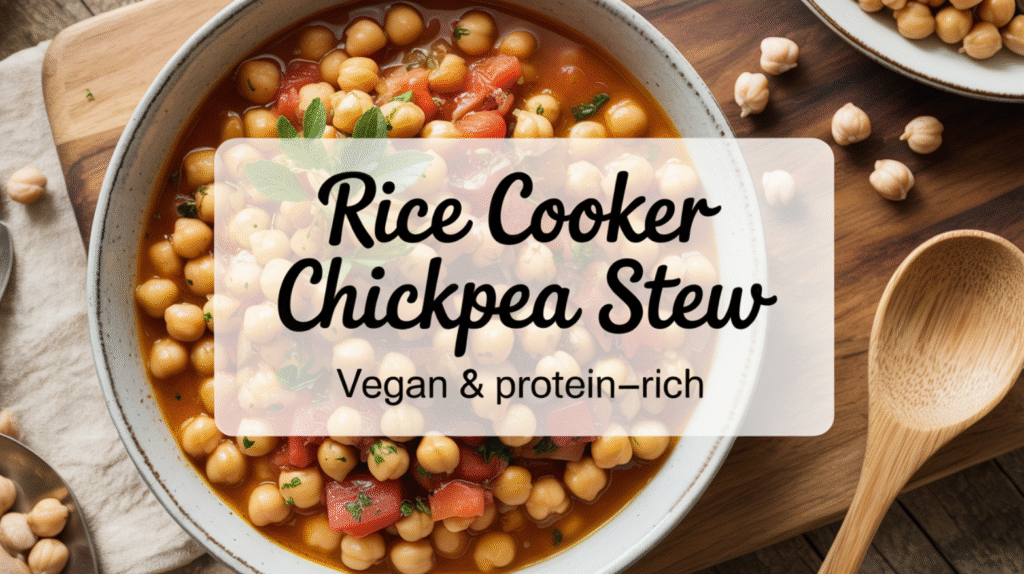
A rice cooker can turn simple pantry ingredients into a hearty, protein-rich chickpea stew with almost no effort. As the vegetables soften and the chickpeas simmer gently in broth and tomatoes, the cooker builds deep flavor while keeping everything tender and balanced. This one-pot vegan dinner is filling, affordable, and perfect for busy days when you need something nourishing without constant supervision. If you enjoy this kind of cozy, set-and-forget cooking, you might also like a comforting vegan potato rice casserole or a vibrant vegan Spanish rice with black beans cooked in your rice cooker.
Why Chickpea Stew Works Perfectly in a Rice Cooker
A rice cooker maintains steady, moist heat, which allows chickpeas and vegetables to cook evenly and absorb seasoning throughout the cooking cycle.
Chickpeas Hold Their Shape
They stay firm enough for texture while soaking up flavor.
- Prevents the stew from becoming mushy.
- Creates a satisfying, protein-dense base.
Vegetables Soften at the Same Pace
The slow, enclosed heat helps the aromatics and vegetables release their moisture gradually.
- Builds a naturally thick, rich broth.
- Allows spices to deepen over time.
Ingredients for Vegan Chickpea Stew
This stew relies on simple vegetables, spices, and a few foundational pantry items.
Core Ingredients
These ingredients create the body and flavor of the stew.
- Cooked chickpeas (canned or pre-cooked)
- Onion
- Garlic
- Carrots
- Tomatoes (canned diced, crushed, or fresh)
Flavor Base and Spices
These spices create warmth and depth without making the dish heavy.
- Smoked paprika
- Cumin
- Turmeric
- Black pepper
- Salt
Liquid Components
The right liquid ratio ensures proper simmering. For extra flavor, you can build your base similarly to rice cooker veggie broth rice, letting herbs and aromatics season the broth before the stew thickens.
- Vegetable broth
- Water (if thinning is needed)
Optional Ingredients
These add brightness, color, or extra nutrition.
- Spinach or kale
- Bell pepper
- Zucchini
- Fresh parsley or cilantro
- Lemon juice
How to Make Vegan Chickpea Stew in a Rice Cooker
The rice cooker takes care of the simmering, leaving you free to prep toppings or side dishes.
Step 1: Prepare the Aromatics
Add chopped onion and garlic to the rice cooker.
- If your cooker has a sauté function, use it to soften the aromatics.
- If not, they will cook down naturally during the cycle.
Step 2: Add the Vegetables
Layer in sliced carrots, bell peppers, or any other vegetables you prefer.
- These create structure and sweetness.
- Root vegetables hold up well in the cooker.
Step 3: Add Chickpeas and Tomatoes
Place the chickpeas on top of the vegetables and pour in canned tomatoes.
- Tomatoes help create a thicker base.
- Chickpeas absorb seasoning during this stage.
Step 4: Add Spices and Broth
Sprinkle spices over the mixture, then add broth to cover.
- Use enough liquid so everything is submerged.
- A typical ratio is 1½–2 cups broth per 1 can of chickpeas.
Step 5: Cook on “Cook” or “Stew/Porridge” Mode
The stew will begin to bubble and gradually thicken.
- Some cookers may switch to “Warm” early; let it rest for 10 minutes.
- Stir halfway if your cooker tends to heat unevenly.
Step 6: Add Greens or Zucchini
Once the stew softens, stir in spinach, kale, or diced zucchini.
- Close the lid for 5–7 minutes to steam.
- Greens wilt quickly and add nutrients.
Step 7: Adjust Seasoning
Taste and modify the flavor.
- Add salt to bring balance.
- Stir in lemon juice for brightness.
- Add a splash of broth if it is too thick.
Flavor Variations to Try
Small changes can completely shift the stew’s personality.
Mediterranean Style
- Add oregano and basil.
- Finish with olive oil and lemon zest.
Spicy Tomato Version
- Add red chili flakes or cayenne.
- Use fire-roasted tomatoes for extra depth, or take the heat further with a pot of vegan rice cooker chili on another night.
Creamier Variation
- Add a spoonful of coconut milk.
- Makes the stew smoother and slightly sweet.
Serving Ideas
This chickpea stew is versatile and works with several sides.
With Grains
Serve over plain rice or pair it with more flavorful rice cooker dishes like spinach garlic rice, vegan tomato basil rice, or a fragrant vegan herbed rice pilaf with vegetables for a complete plate.
- Rice
- Quinoa
- Couscous
With Bread
Great for dipping and soaking up sauce.
- Crusty bread
- Flatbread
As a Bowl Meal
Add toppings for extra texture.
- Fresh herbs
- Avocado slices
- Toasted seeds
Tips for Getting the Texture Right
If the Stew Is Too Thick
Add water or broth sparingly.
- Chickpeas absorb moisture quickly.
- Stir to bring everything together.
If the Stew Is Too Thin
Use the “Warm” setting for 10–15 minutes.
- Helps reduce excess liquid.
- Encourages natural thickening.
If Flavors Taste Mild
Increase spices after cooking.
- Seasoning strengthens once the stew sets.
Meal Prep Advantages
This dish becomes more flavorful as it rests.
Ideal for Batch Cooking
- Stores in the refrigerator for 4 days.
- Freezes well for future meals.
- Reheats easily on “Warm” mode with a splash of broth.
Budget-Friendly and Filling
Chickpeas are inexpensive and nutrient-dense, and pairing this stew with other rice cooker mains like mushroom rice pilaf or a creamy vegan potato rice casserole makes it easy to build satisfying, low-cost meal plans.
- Chickpeas are inexpensive and nutrient-dense.
- Vegetables can be swapped based on price or availability.
FAQs
Can I use dried chickpeas?
Yes, but they must be pre-soaked and cooked before adding. Rice cookers cannot soften fully dried chickpeas.
Can I make this stew without tomatoes?
Yes. Replace tomatoes with extra broth and add lemon juice or vinegar for acidity.
What if the cooker switches to “Warm” too early?
Let it sit covered for 10–20 minutes. Residual heat continues cooking and thickening the stew.
Can I add potatoes?
Absolutely. Add diced potatoes with the vegetables and increase broth slightly.
Does this stew freeze well?
Yes. It holds texture and flavor after thawing, making it ideal for weekly meal prep.